
VR for Healing
How Creative Media at SCA is Deepening the Work of Palliative Care
by Malini Adkins
Virtual Reality Memorial, where dying patients create technology-driven remembrances for their grieving families, aren’t yet common in end-of-life conversations, but this concept has real potential to catch on.
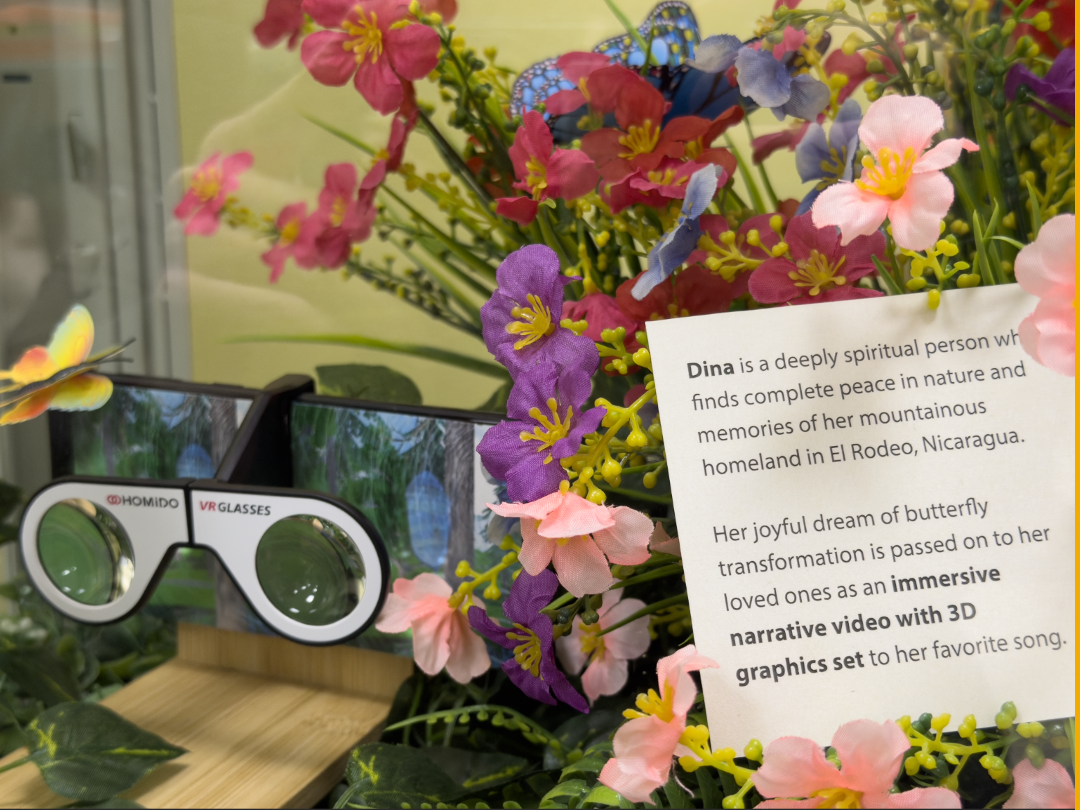
The “Virtual Reality Memorial”, a project in the Creative Media & Behavioral Health Center, is exploring the benefits of using the arts to create memorials. Working in partnership with the Keck School of Medicine at USC, and the Women’s Clinic and Wellness Center at LA General Medical Center, the project has facilitated the creation of “immersive legacy memorials” for two gynecological cancer patients, Dina and Felicity. Using letters, interviews, and videos the patients have addressed to their loved ones, the team creates immersive media projects as a legacy experiences that can be a sources of comfort. The project, sponsored by USC Arts in Action—the university’s initiative for using the arts to address social issues—is enabling the Creative Media & Behavioral Health Center to demonstrate the unique role media arts can play in expressing and preserving legacies.
Marientina Gotsis, Director of the Creative Media & Behavioral Health Center, says the initial seeds for this idea emerged from a deeply personal experience she had nearly twenty years ago. “My closest college friend, who was dying of cancer, asked me to make a bespoke website for him to showcase his architectural work,” she says. “At his wake, I gave out a copy of the website burned onto a CD-ROM with a cover made of his favorite photograph. A decade later, in one of my experimental practicum classes, we explored end-of-life legacy artmaking with VR while one of the students produced short immersive interactives on behalf of the others over the course of a few days.”
Serendipitously, Gotsis received an email from USC and LA General gynecologic oncologist Dr. X. Mona Guo, MD, regarding a project that proposed using interviews to help gynecological cancer patients create legacy pieces for their families and friends.
“During my training, I’ve been stricken by how abruptly end-of-life comes for patients, despite our best attempts for preparation,” Dr. Guo wrote in her email to Gotsis in September 2023. “One thing that has helped at Keck is writing letters to their families (specifically children) to be opened at future life events the patient could not be present for. However, at LA General, many of my patients cannot read or write, so creating short video clips on their phones has been helpful. I wish I could help more patients do this.”
Gotsis says Dr. Guo’s idea to help her terminal cancer patients create professional video and/or audio memoirs and messages to their families was right in line with what she had done with her friend’s website. “I told her I had been waiting for her for a decade.” Together they applied for an Arts in Action grant to fund the project.
“My initial impression of the project was that it was an entirely new world of narrative I had just discovered,” says Frank Perazzini, who joined the project when he entered the Cinematic Arts (Media Arts, Games and Health) MA program. “I was really grateful to apply the writing skills I had learned in my undergraduate work toward something as special as VR Memorial. A personal goal I had for this project was to capture the essence of the letters written by the patients to their families in their VR Memorial.”
The creation of each memorial art piece has led to significant personal growth and reflection for the design and development team. As a result, Felicity and Dina’s core narratives have begun to illuminate their legacies. The project is helping establish creative media as a legitimate and healing tool in end-of-life care.
Gotsis says the project also helps address the mental and emotional wellness of healthcare workers who take care of the terminally ill. “The health professionals who care for people in their last few months and weeks and days have a deep wish to know and remember something of people beyond their diagnosis and their struggle to cope with the losses that accumulate over time in practice,” says Gotsis.
The future of VR memorials is promising, offering numerous opportunities for patients to manage their palliative care options and preserve their legacies by creating immersive experiences that honor and memorialize patients for eternity, especially if it is eventually covered by health insurance, including federal programs like Medicare.
“Not everyone in the world has someone who can plan a legacy experience for another person, especially while they are still alive,” Gotsis pointed out. “Those who have state-sponsored people assigned to preserve legacies or loved ones who have some experience and capacity get this opportunity.”
USC Arts in Action has approved additional funding for the program.
Malini Adkins ‘25 is an alumnus of the Media Arts, Games and Health Master's program at USC School of Cinematic Arts. She writes about gaming and health-related topics.
The USC Creative Media & Behavioral Health Center (CM&BHC) is an organized research unit between the School of Cinematic Arts and the Keck School of Medicine.
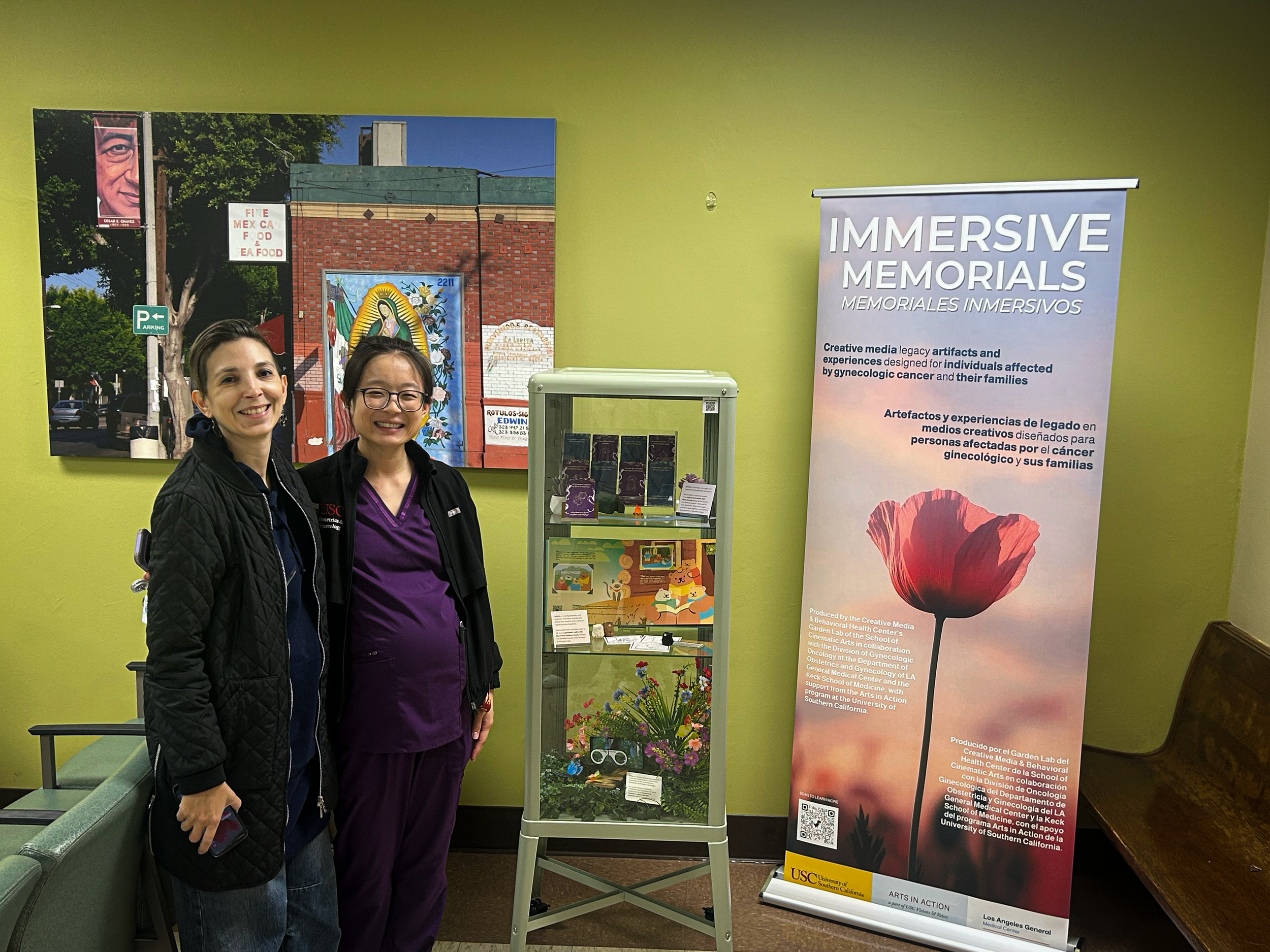
Professor Marientina Gotsis with….